Update time: March 16, 2026
When implementing Adobe Analytics server-side tracking with the Adobe Experience Platform Web SDK, multiple events can occur at the same time when a page loads.
For example:
- PageView
- Product Impression
- Internal Promotion Impression
If these events are sent separately, each request consumes one Server Call in Adobe Analytics.
To optimize Server Call usage, these events can be merged into a single XDM event and sent together.
This article explains how to merge PageView and Product Impression into one event using Adobe Experience Platform Web SDK and Adobe Launch (Tags).
Why Merge Events in Adobe Analytics Web SDK
In traditional client-side implementations, events are often sent individually. However, in a server-side Web SDK architecture, multiple events can be combined into a single request payload.
Merging events provides several benefits:
- Reduce Server Call consumption
- Improve tracking efficiency
- Simplify event architecture
- Avoid unnecessary duplicate requests
For example:
| Scenario | Server Calls |
|---|---|
| PageView + Product Impression sent separately | 2 |
| PageView + Product Impression merged | 1 |
This approach is especially useful for e-commerce tracking, where multiple product-related events may occur on page load.
Prerequisites
Before implementing event merging, ensure the following components are already configured:
- Datastream
- XDM Schema
- Web SDK implementation
- Adobe Launch (Tags)
For the basic setup, refer to the guide: Adobe Analytics Server-side Tracking(Via Web SDK)
Implementation Logic
The event merging logic works as follows:
- 1、Capture supporting events (such as Product Impression).
- 2、Store the event data in XDM variables.
- 3、Trigger the PageView event.
- 4、Send the merged XDM payload through Web SDK.
The key idea is: Supporting events must run before the PageView event is sent.
Use Cases for Merge Events
Step 1:Update the XDM Schema
First, update the Schema so that it can support multiple event types.
The following Field Groups should be included:
- Adobe Analytics ExperienceEvent Template
- Adobe Analytics ExperienceEvent Full Extension
- Consumer Experience Event
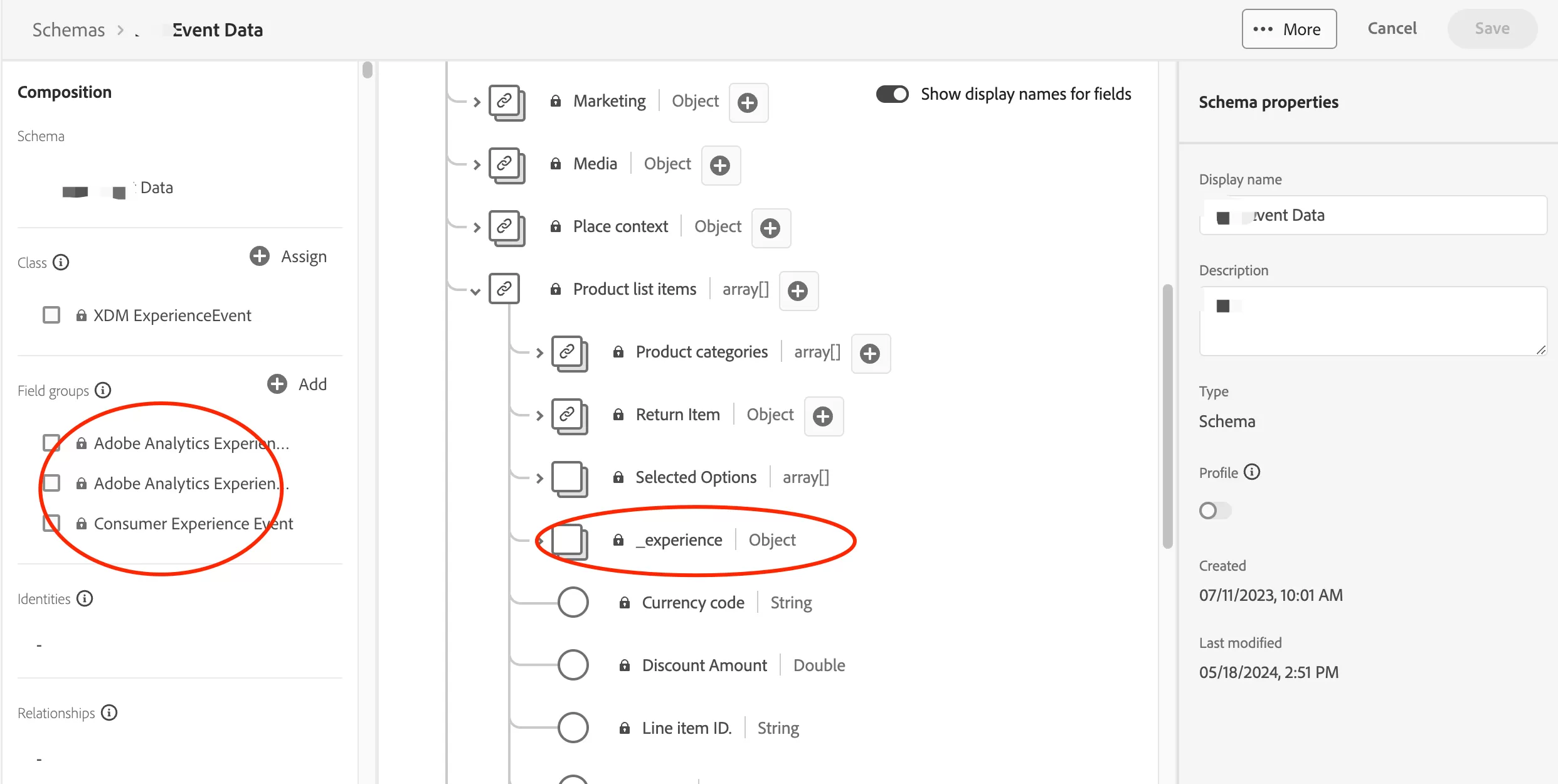
In addition, the Adobe Analytics ExperienceEvent Template field group must also be added to Product List Items. This allows you to configure eVars and events at the product level.
Step 2:Track PageView(Rule 1)
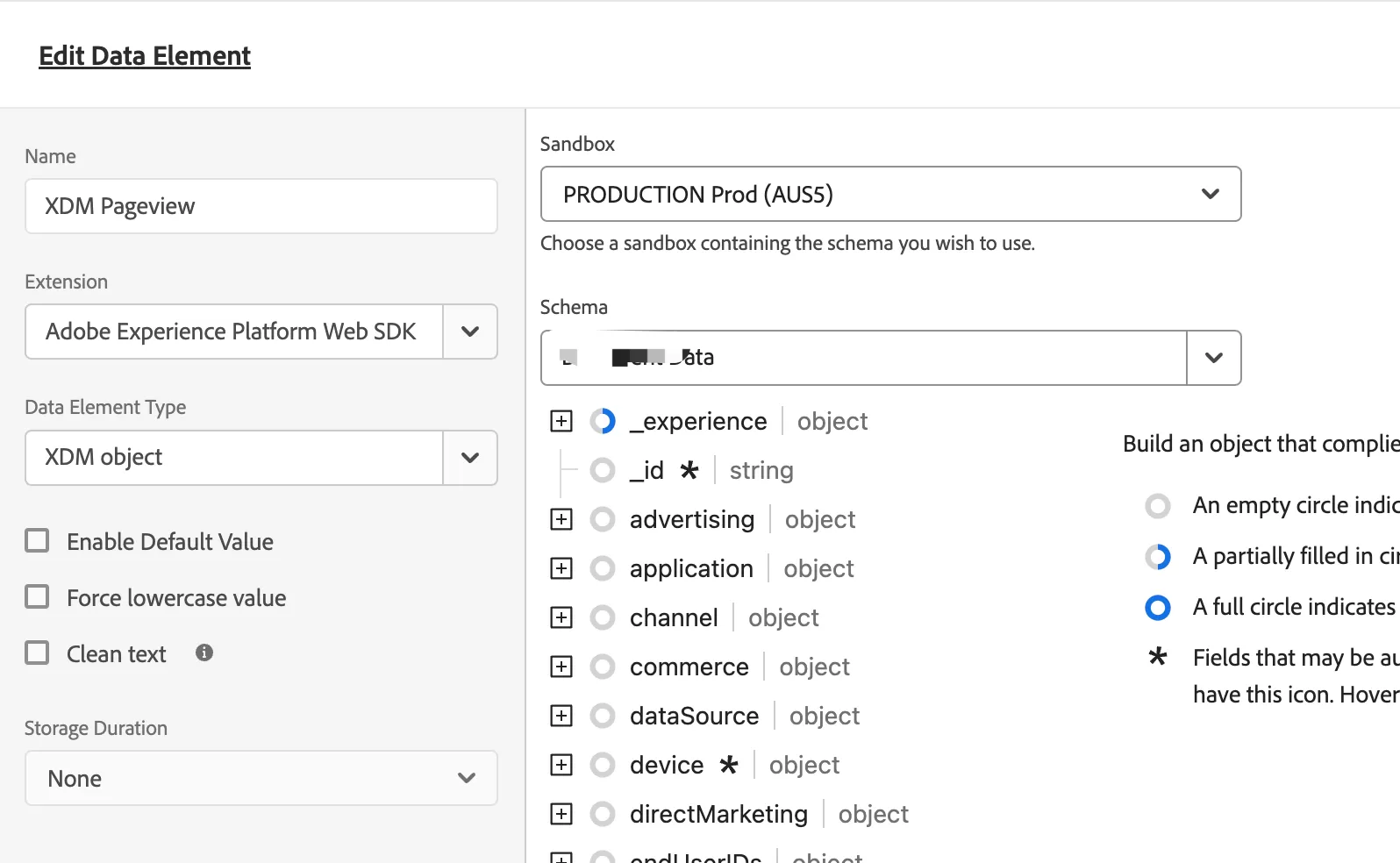
XDM Pageview
This XDM structure stores the basic PageView information:
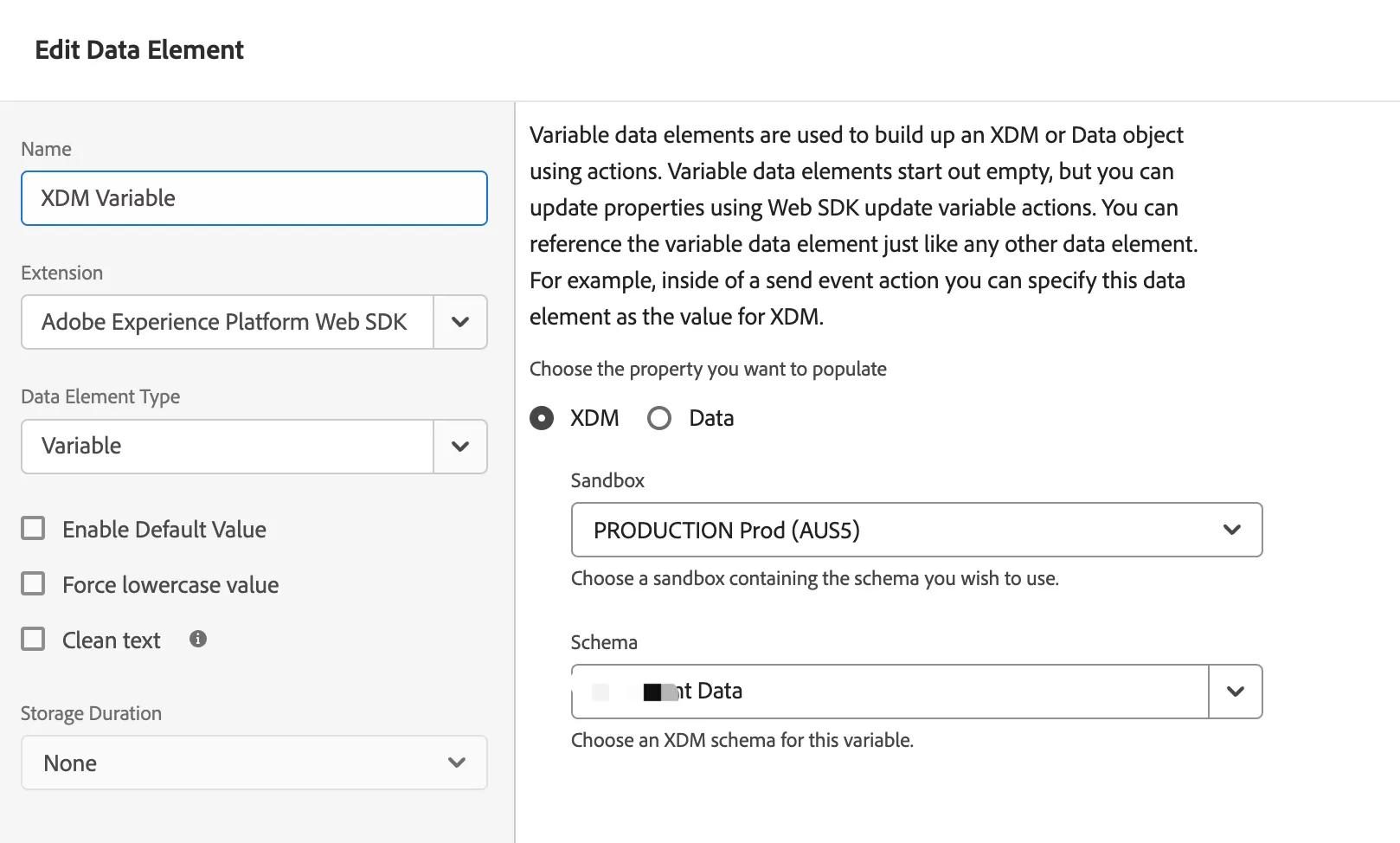
XDM Variable
Additional event data (for example Product Impression) will be temporarily stored in XDM variables.
XDM | Pageview
Merge PV and other events (Product Impression) into the same XDM: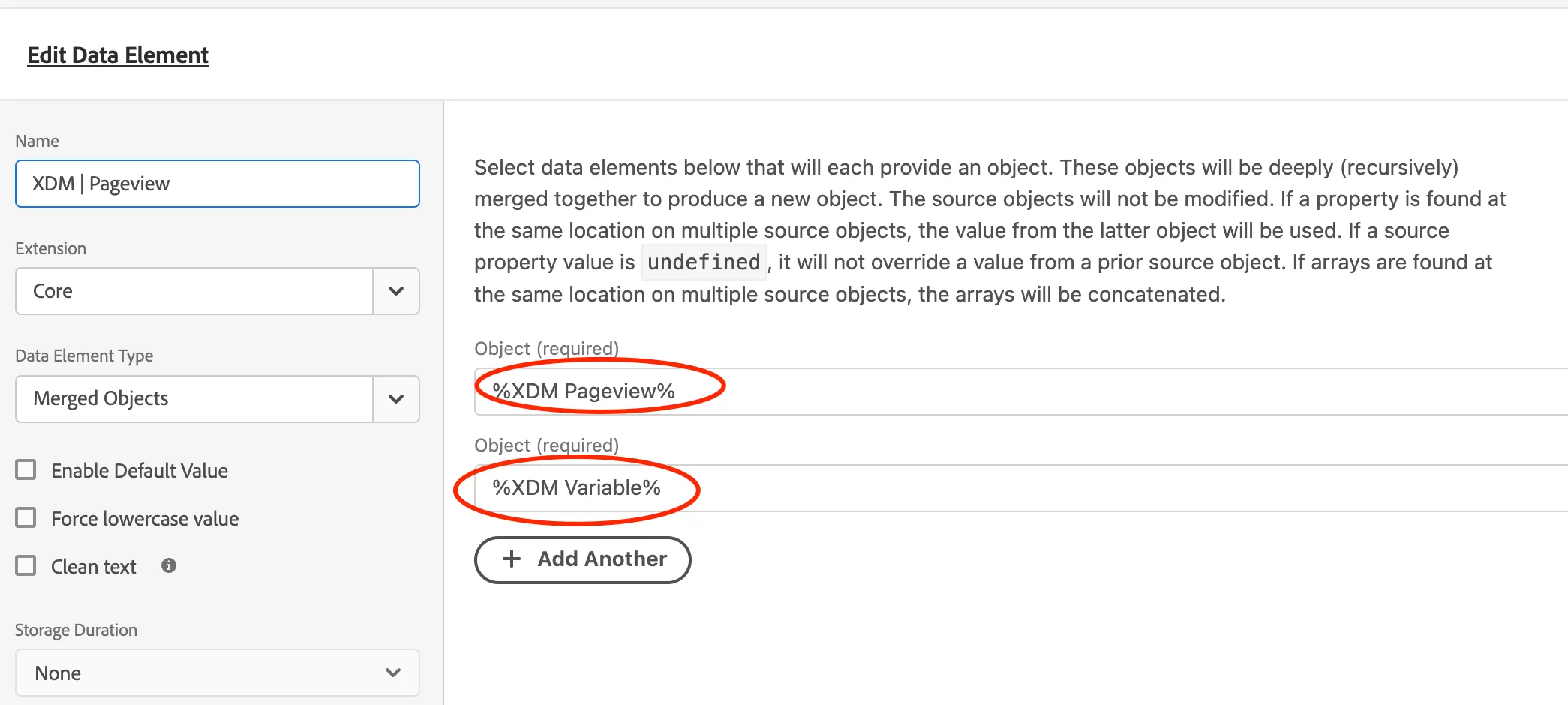
All Page : Library Load : 50 : PageView : TAG[Adobe Analytics]
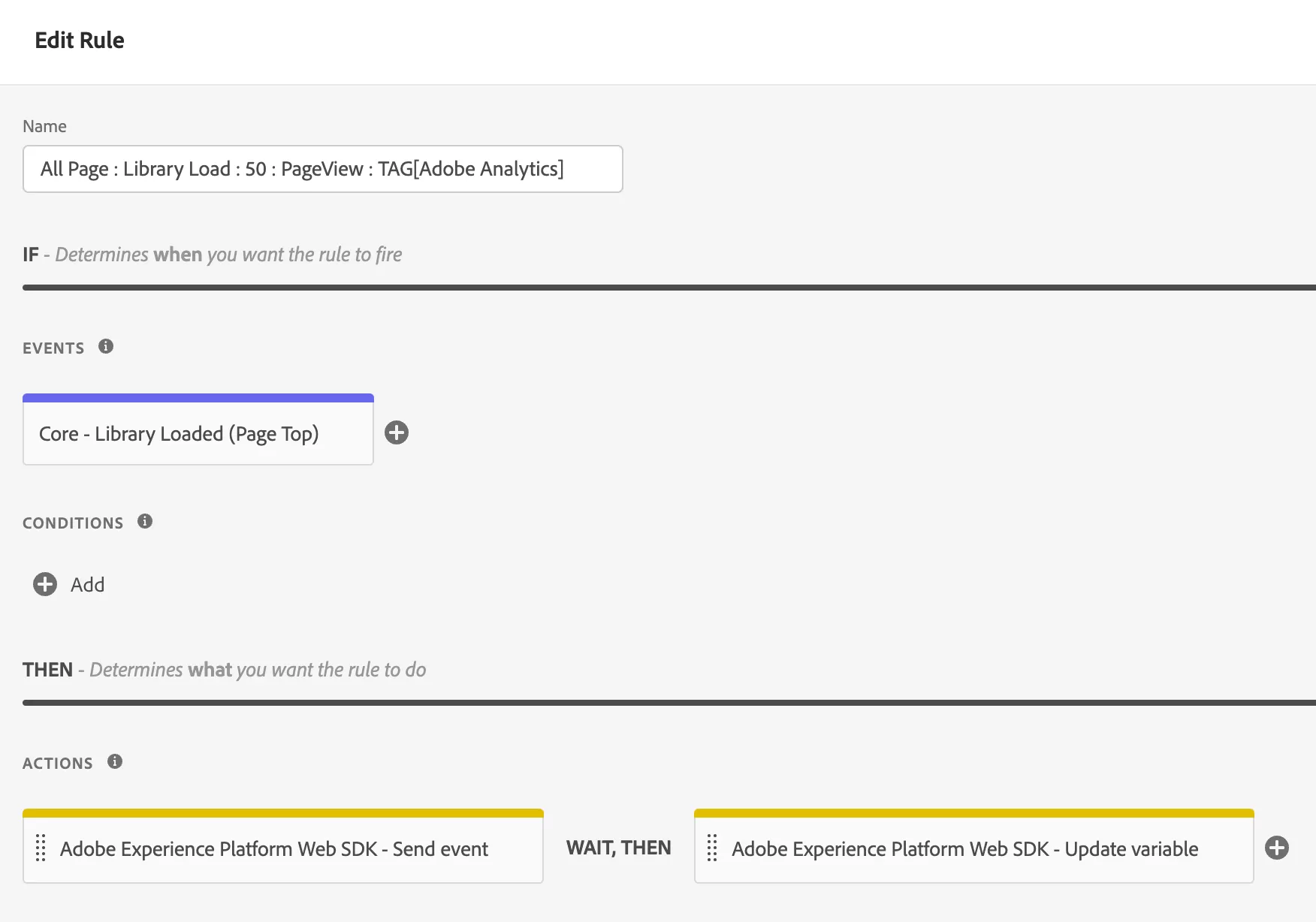
The default Order of this Rule is 50.
Action 1:Select the merged XDM | Pageview structure as the payload. This action sends the final event to Adobe Analytics.
Action 2:Enable Clear existing value,After sending the event, you should clear the variables to prevent them from appearing in the next request.
Step 3:Track Product Impression(Rule 2)
All Page : Library Load : 45 : ArticleImpression : TAG[Adobe Analytics]
Next, create a rule to capture Product Impression data.
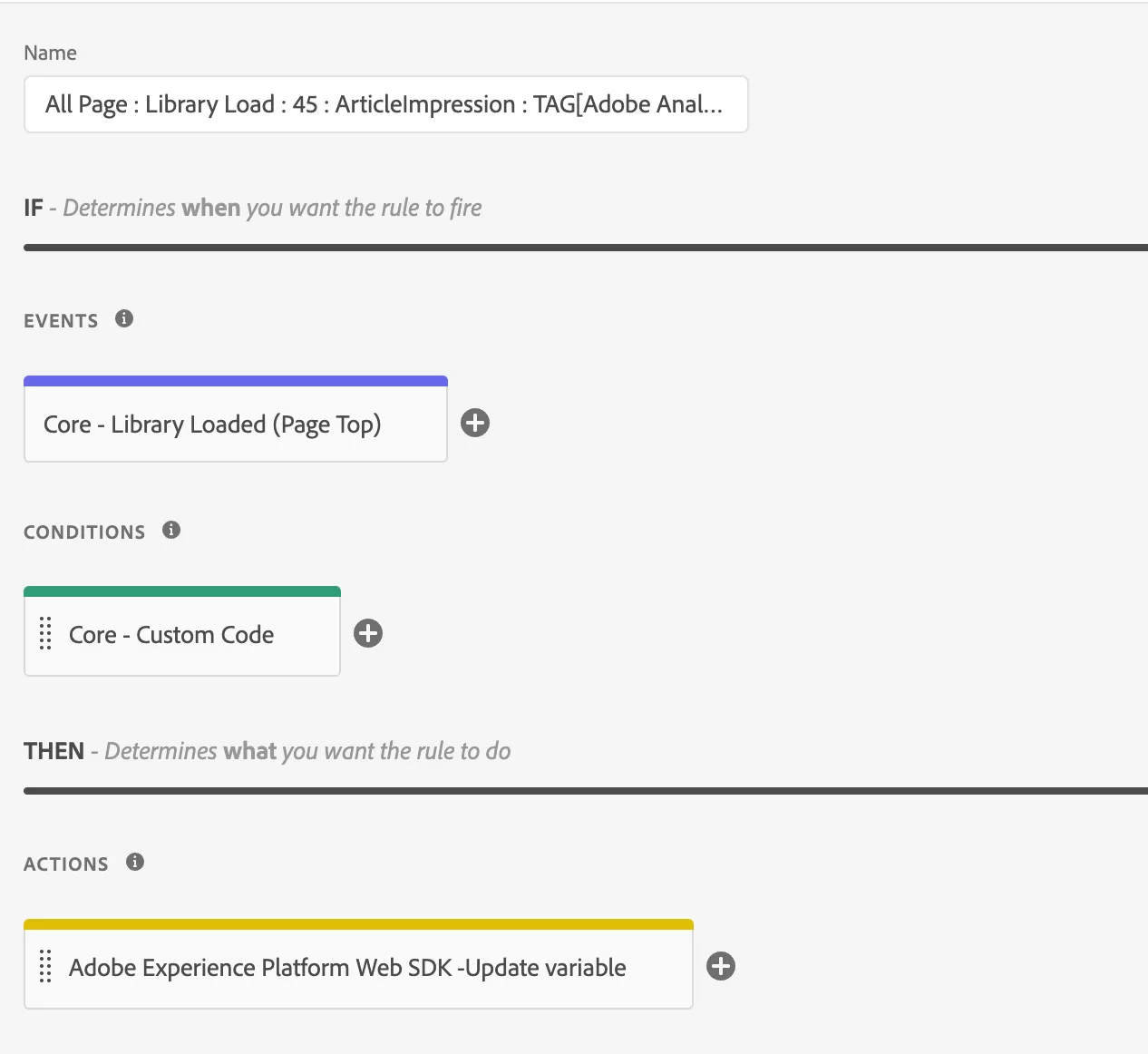
The Order must be smaller than the PageView rule.
Example:
| Rule | Order |
|---|---|
| Product Impression | 45 |
| PageView | 50 |
This ensures the Product Impression data is processed first and merged before the PageView event is sent.
Action 1:This action stores Product Impression data in the XDM structure.
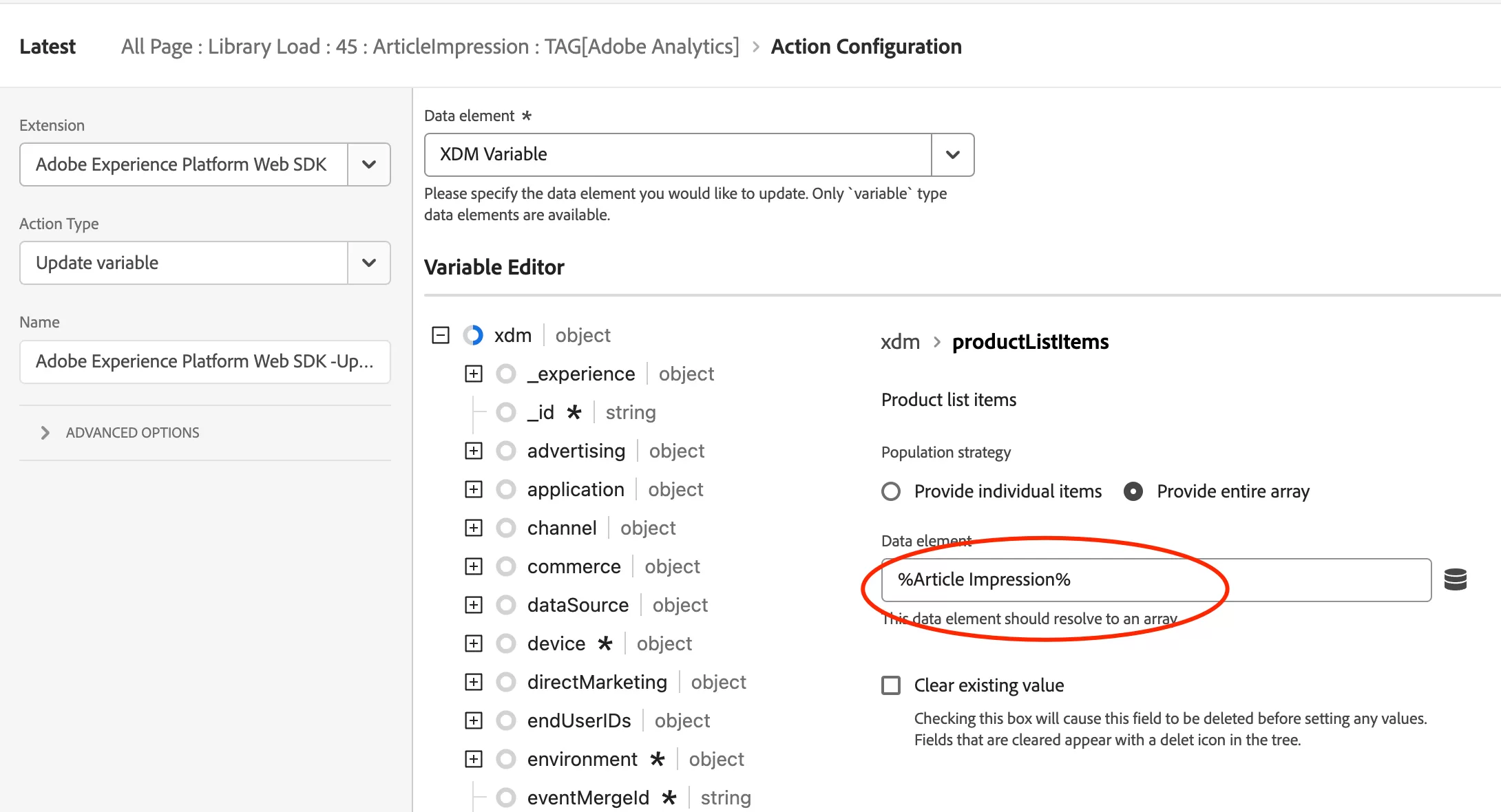
One important detail:
The product array structure used in %productImpression% differs from the traditional client-side implementation.
Therefore, the data must be transformed into a format compatible with the XDM schema used in server-side tracking.
Step 4:Data Verification
After completing the implementation, verify the request in the browser.
You should see that:
- PageView
- Product Impression
are included in the same request payload, confirming that the events were successfully merged.
Common Event Merging Scenarios
Event merging is useful in many tracking scenarios.
- E-commerce Tracking:Merge PageView、Product Impression、Internal Promotion Impression、Product View
- Content Websites:Merge PageView、Article Impression、Recommendation Impression
-
Marketing Tracking:Merge PageView、Campaign Impression、Banner Impression
Best Practices for Web SDK Event Design
When designing server-side events, consider the following best practices:
1. Use PageView as the Primary Event
Most implementations use PageView as the main event trigger, while other events are merged into it.
2. Control Rule Execution Order
Ensure supporting events run before the main event is sent.
Example:
| Event | Order |
|---|---|
| Product Impression | 45 |
| PageView | 50 |
3. Clear Variables After Sending Events
Always clear variables after sending events to prevent data leakage into subsequent requests.
4. Keep the XDM Structure Consistent
Use a single merged XDM structure whenever possible to maintain a clean implementation.