Updated: December 19, 2025
If you are new to Adobe Analytics, you will quickly encounter the term “report suite.” You may also see related terms such as global report suite, virtual report suite, multi-suite tagging, and rollup report suite.
These terms describe different ways to collect, organize, process, and access Adobe Analytics data.
What Is a Report Suite in Adobe Analytics?
Adobe defines a report suite as a silo of data that Adobe Analytics uses to generate reports.
In practical terms, a report suite is an independent Adobe Analytics data environment where data is collected, processed, stored, and reported.
When an Adobe Analytics implementation sends a hit, the tracking code includes one or more Report Suite IDs, also known as RSIDs. Adobe uses these IDs to determine where the data should be processed and reported.
A simple way to think about it is this:
A report suite is the destination and reporting boundary for Adobe Analytics data.
Report Suite VS Property
A report suite is conceptually similar to a property in Google Analytics, but the two products use different data models and configuration concepts.
| Concept | Adobe Analytics | Google Analytics 4 |
|---|---|---|
| Main data collection and reporting container | Report suite | Property |
| Identifier | Report Suite ID, or RSID | Measurement ID |
| Access segmentation | Virtual report suites, segments, permissions | Data streams, audiences, filters, user permissions |
| Multiple business units | Global report suite, separate report suites, or virtual report suites | Usually managed within a property using data streams, audiences, and reporting controls |
| Configuration model | Many settings are configured at report-suite level | Many settings are configured at property or data-stream level |
The comparison is useful for building a mental model, but it is not a one-to-one technical mapping.
Report Suite Type
Adobe Analytics provides several types of report suites, each designed for different data collection and analysis needs.
Standard Report Suite
A standard report suite usually represents a single website, mobile application, brand, or business unit.
For example:
- example.com sends data to rsid_example_web
- A mobile application sends data to rsid_example_app
- A regional website sends data to rsid_example_uk
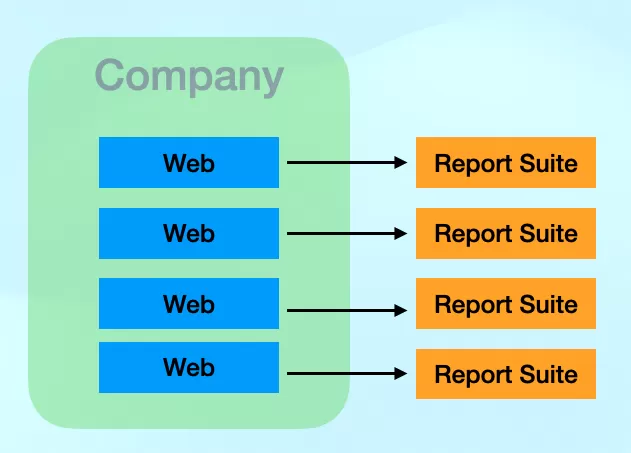
A separate report suite may be appropriate when a website or application has substantially different。
However, creating a separate report suite for every website is not automatically the best architecture. When multiple digital properties share similar tracking requirements, a global report suite with virtual report suites may be easier to maintain.
Global Report Suite
A global report suite collects data from multiple websites, domains, mobile applications, or other digital properties owned by an organization.
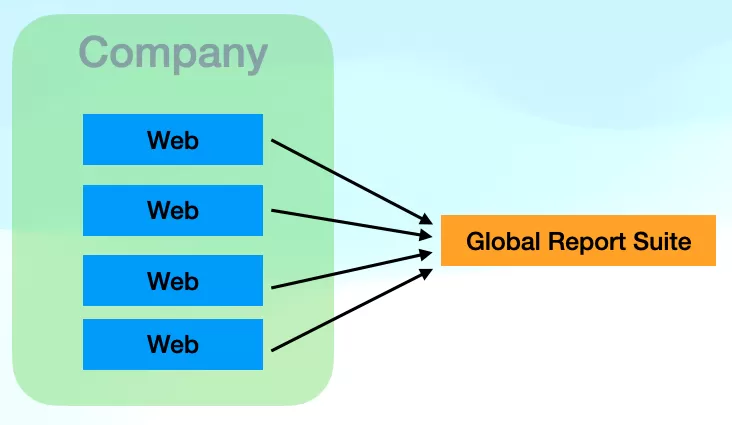
Adobe recommends using a global report suite in many situations because it can simplify implementation and provide an aggregated view of business performance. You can then use segmentation and virtual report suites to create more focused reporting views.
Rollups Report Suite
A rollup report suite combines data from multiple source report suites into one reporting destination.
For example, a company might combine the data from several regional report suites into a rollup report suite to review high-level totals.
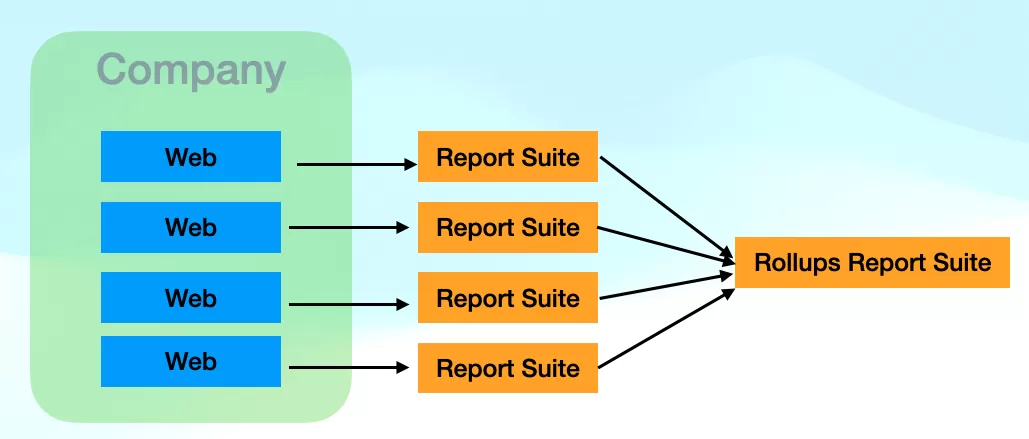
Rollup report suites are different from global report suites:
- A global report suite receives data directly from the implementation
- A rollup report suite combines data from existing report suites
Virtual Report Suite
A virtual report suite, or VRS, is a filtered view of an existing report suite.
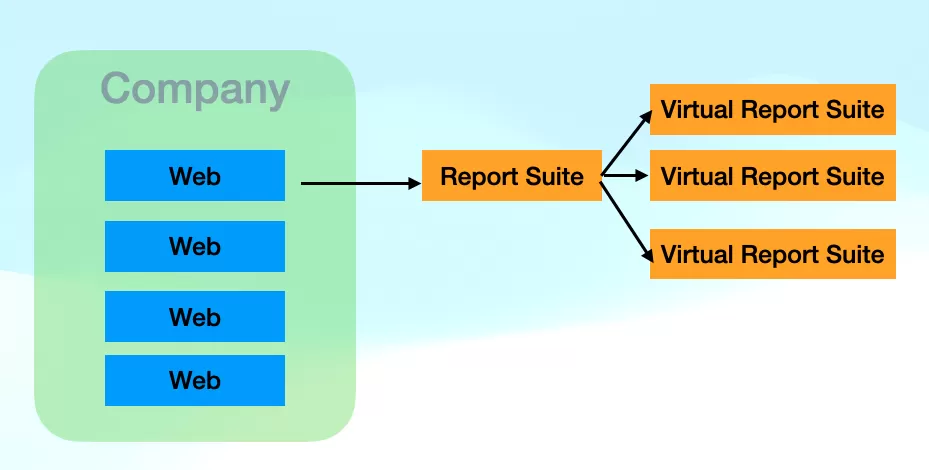
It does not collect data independently. Instead, it applies one or more segments to a parent report suite and presents the filtered data as a separate reporting view.
Which Report Suite Approach Should You Use?
There is no universal answer. The correct approach depends on the reporting scope, implementation requirements, and access model.
Scenario 1: One Website or One Application
Use one standard report suite.
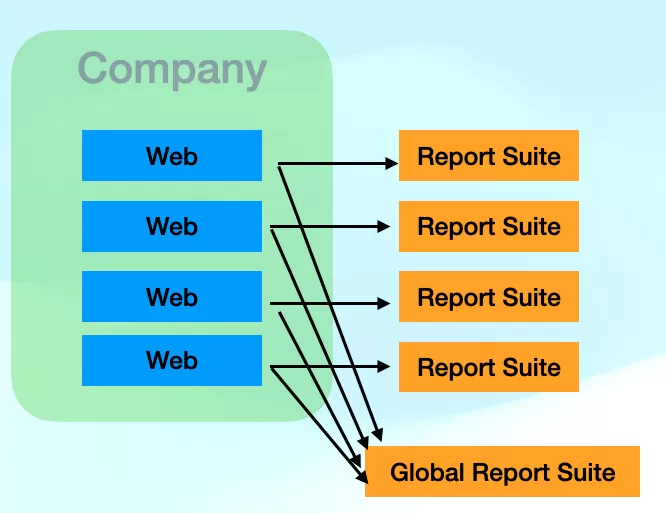
Scenario 2: Multiple Websites With Similar Tracking Requirements
Consider separate report suites or multi-suite tagging
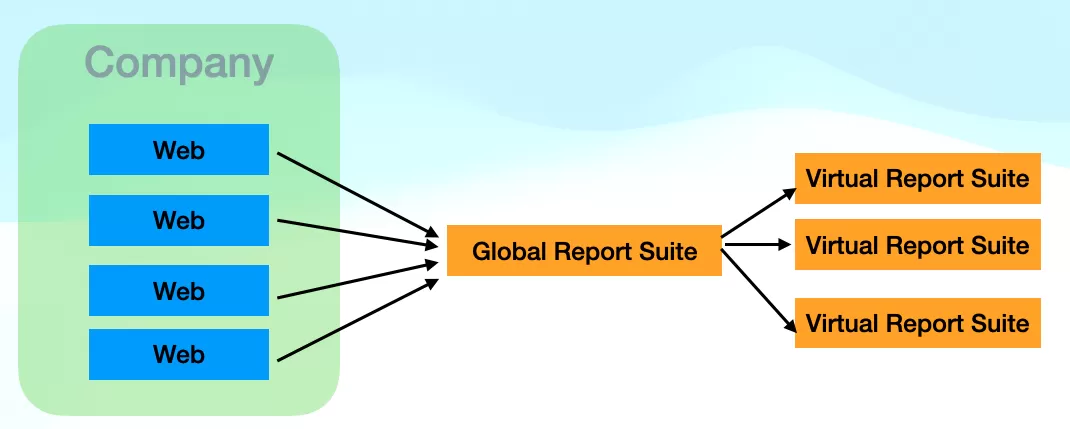
Scenario 3: Multiple Websites With Different Business Requirements
Use a global report suite with virtual report suites
Final Recommendations
A report suite is the core data and reporting boundary in Adobe Analytics. It determines where data is collected, processed, stored, and made available for analysis.
The main options are:
- Use a standard report suite for an independent website, application, or business unit.
- Use a global report suite when you need a unified view across several digital properties.
- Use virtual report suites when teams need filtered access without additional data collection.
- Use multi-suite tagging when separate report suites require independent settings, data feeds, or reporting capabilities.
- Treat rollup report suites as a specialized or legacy option that requires careful evaluation.
I generally recommend starting with a global report suite and virtual report suites when multiple websites share a consistent implementation. However, I would keep separate report suites when the properties have genuinely different data models, governance rules, or real-time reporting requirements.