Update time: May 30, 2026
You’re in your GA4 Admin panel, you’ve typed the email address, you’ve selected the right role — and then it hits you. An error message. Maybe it’s “Failed to register users.” Maybe it’s “This email doesn’t match a Google Account.” Or maybe it’s something about your organization’s user policy.
If you’ve been there, you know how frustrating it is. You’re just trying to give someone access, and Google throws one cryptic error after another at you.
The thing is, most of these errors have very specific causes — and once you know what they are, they’re easy to fix. In this article, I’ll walk you through the four most common GA4 user invitation errors, why they happen, and how to resolve each one.
Error #1: “Failed to Register Users”
This is probably the most common GA4 user error, and the most confusing one because the error message doesn’t tell you why it failed.

Why Does This Happen?
In my experience, this error is almost always caused by a temporary hiccup on Google’s backend servers — not a problem with your GA4 configuration.
It can happen during periods of high server load, while Google is performing maintenance, or sometimes for no reason I can figure out at all. I’ve seen it appear, disappear, and then reappear a few minutes later without anyone changing anything.
Don’t get me wrong — it’s annoying. But it’s rarely a sign that something is broken in your setup.
How to fix it
Try these troubleshooting steps in order:
- Refresh the page and try again
- Wait 10-15 minutes and try again
- Use an Incognito window
- Clear your browser cache and cookies
- Try another browser
- Confirm you have Administrator access
- Verify the invited email is linked to a Google Account
For a more detailed deep dive, I’ve written a separate guide here: GA4: How to Fix “Failed to Register Users” Error
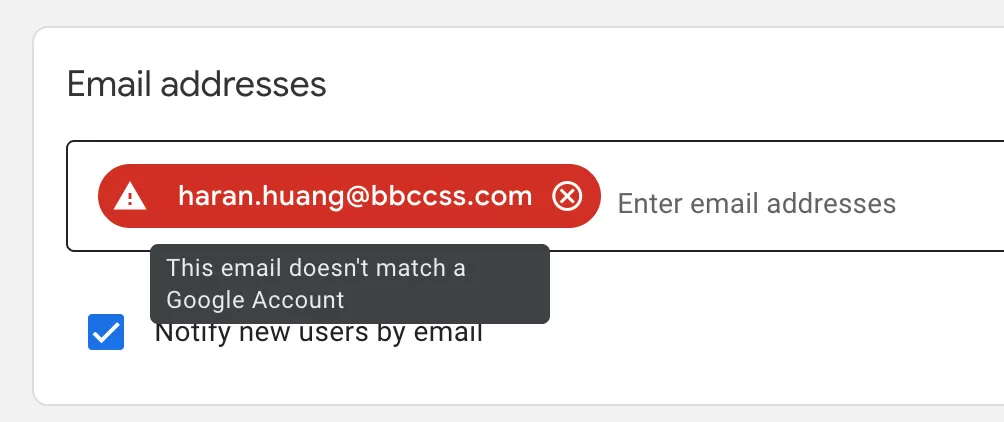
Error 2 :”This email does’t match a Google Account”
Why does this happen?
This one is straightforward: the email address you entered isn’t associated with a Google Account.
GA4 (like all Google services) requires users to sign in with a Google Account before they can be granted access. If the person you’re inviting has never registered that email address with Google, the system can’t process the invitation.
I’ve seen this happen most often when:
- The person uses a work email that isn’t linked to a Google Account
- You’re inviting someone who only has a non-Google email (like an Outlook or Yahoo address)
- There’s a typo in the email address (happens more than you’d think)
How to fix it
Ask the user to create a Google Account using their email address before you send the invitation again.
If the user already has a Google Account, double-check that you typed the email address correctly.
Even one wrong character will trigger this error.
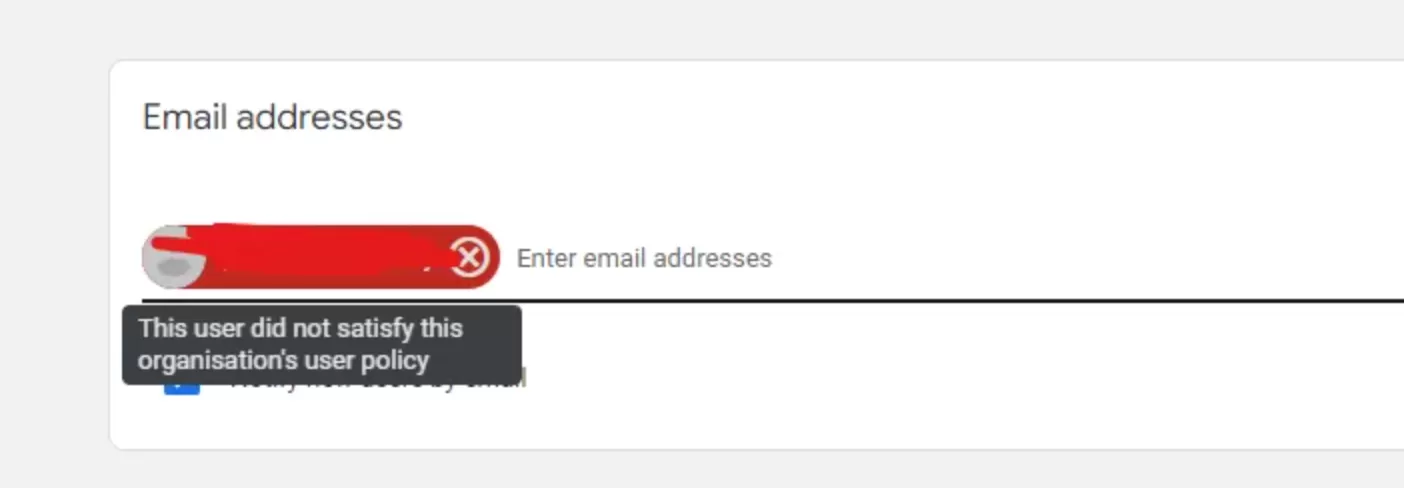
Error 3 :”This user did not satisfy this organization‘s user policy”
Why does this happen?
Your organization has configured a User Policy in Google Marketing Platform that restricts who can be invited to GA4.
For example, your organization might have a policy that only allows email addresses from your company’s domain — such as yourcompany.com. If you try to invite someone with a personal Gmail address or a different domain, Google blocks the request automatically.
How to fix it
You’ll need to update the User Policy in Google Marketing Platform. Here’s how:
Go to Google Marketing Platform Home :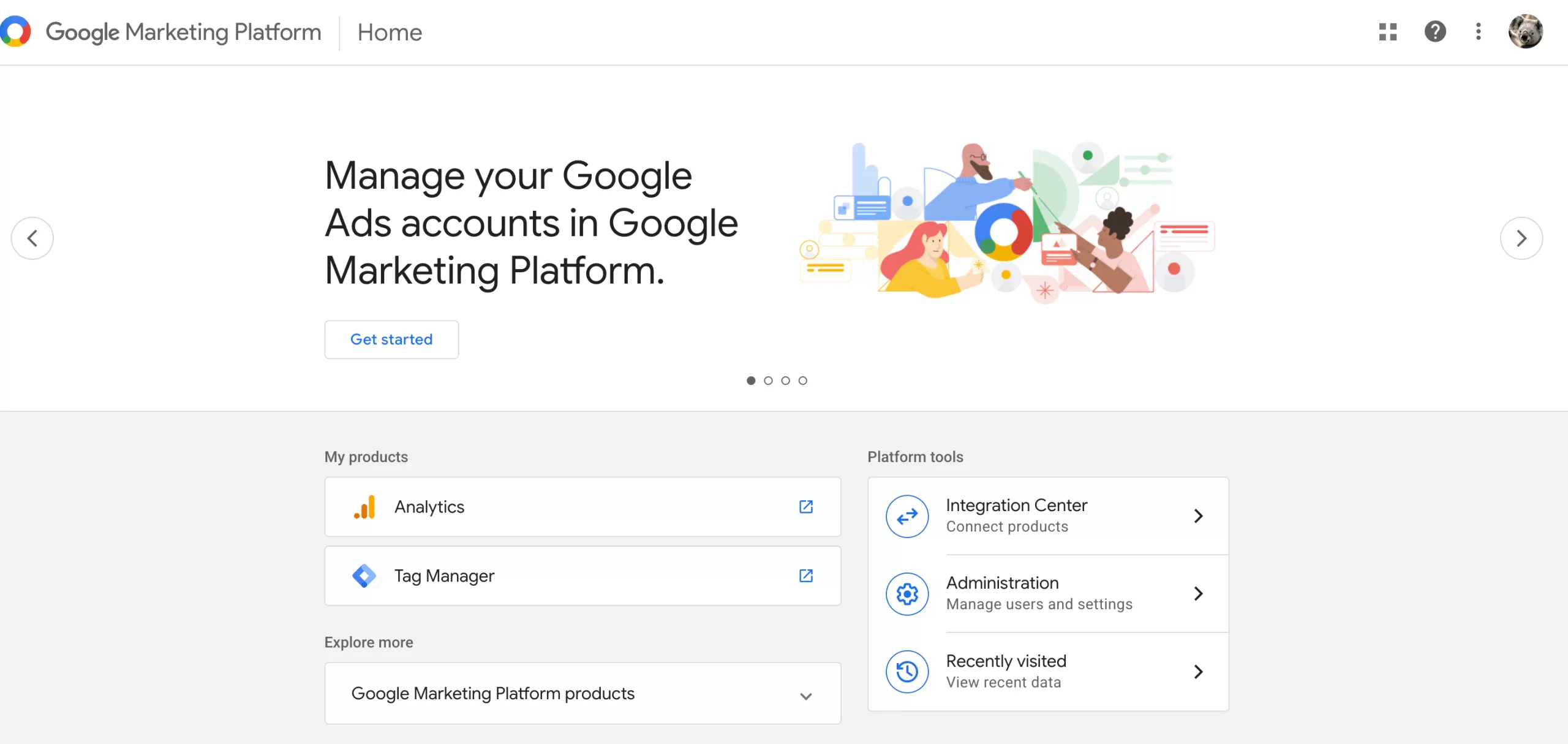
Click「Administration」——「User policy」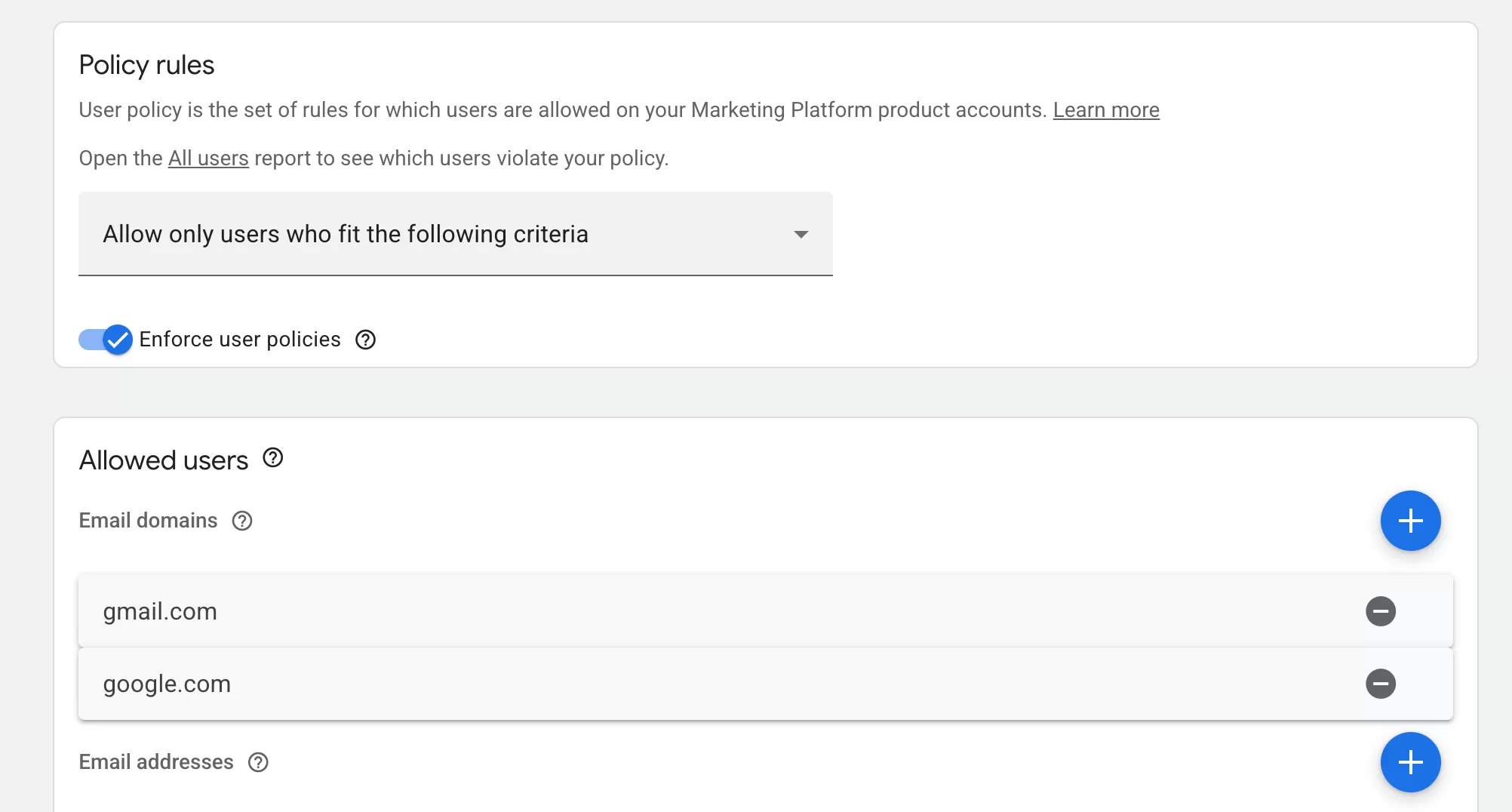
Add the external email domains you want to allow, save your changes and send the invitation again.
Read more: GA4: How to Fix“This user did not satisfy this organization’s user policy” Error
Error 4 :Insufficient Permissions

Why Does This happen?
Your current GA4 role doesn’t include permission to manage users. Simple as that.
Only users with the Administrator role can add, remove, or modify user access at the Account or Property level. If you have an Analyst or Viewer role, you can see data and use reports, but you can’t invite new users.
How to fix it
- Ask an existing Administrator to grant you Administrator access.
- Or ask an Administrator to invite the new user on your behalf.
To check your role: go to Admin → Account Access Management or Property Access Management and look for your email address in the list.
Other GA4 User Access Errors You Might Encounter
Although the four errors above are the most common ones I’ve seen (and dealt with myself), you might also run into:
- Missing permissions — Your role is too restricted to perform the action
- User already exists — The user is already in the account or property
- Account-per-user limit reached — Each Google Account can only belong to a limited number of Analytics accounts. If the user is already at the limit, they’ll need to remove themselves from another account first
- Organization policy restrictions — Similar to Error #3 above, but possibly at a different policy level
- Google Workspace admin restrictions — If your company uses Google Workspace, the Workspace admin may have additional restrictions in place
If you’re still unable to add users after checking all of the above, verify your account permissions and organizational policies one more time before contacting Google Support.
FAQ
Why can’t I add a user to GA4?
The most common reasons include:
- The email address isn’t linked to a Google Account.
- You don’t have Administrator permission.
- Your organization blocks external email domains.
- Google is experiencing a temporary service issue.
Does the invited user need a Google Account?
Yes. Every GA4 user must sign in with a Google Account before they can receive access.
Who can add users in GA4?
Only users with the Administrator role can manage user access at the Account or Property level.
Why do I get “Failed to Register Users” in GA4?
This error is typically temporary and originates from Google’s backend services. Waiting a few minutes and trying again often resolves the issue.
Final Words
GA4 user management errors can be frustrating, especially when you’re trying to onboard a new team member and Google keeps throwing error messages at you. But the good news is that each error has a specific cause and a clear fix — once you know what to look for.