You already know how to track element visibility in Google Tag Manager. The same measurement is also possible in Adobe Launch.
The main difference is the terminology. Instead of GTM’s Element Visibility trigger, Adobe Tags uses the Core extension’s Enters Viewport event. This event fires when a selected element enters the visitor’s viewport.
In this guide, we will track the visibility of one page element, send an Adobe Analytics success event, and verify the resulting beacon before publishing.
Why Track Element Visibility?
A page view tells you that someone loaded a page. It does not tell you whether they actually reached an important section.
Element visibility tracking can help you measure whether visitors:
- Saw a promotional banner
- Reached a pricing section
- Viewed a lead-generation form
- Scrolled to a product comparison
- Reached an important call to action
Think of the rule as a virtual observer. It waits until the selected element appears inside the browser window, then sends a measurement event.
Step‑by‑Step Setup
Step 1: Create the Rule
Create a Rule in Adobe Launch and name it Element Visibility:
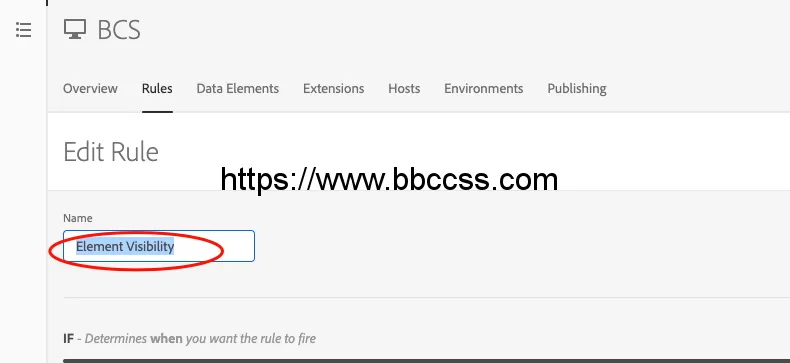
Use a specific name that describes both the tracking purpose and the element being measured.
Step 2: Configure the Enters Viewport Event
Create an EVENTS and select Enters Viewport for the Event Type:
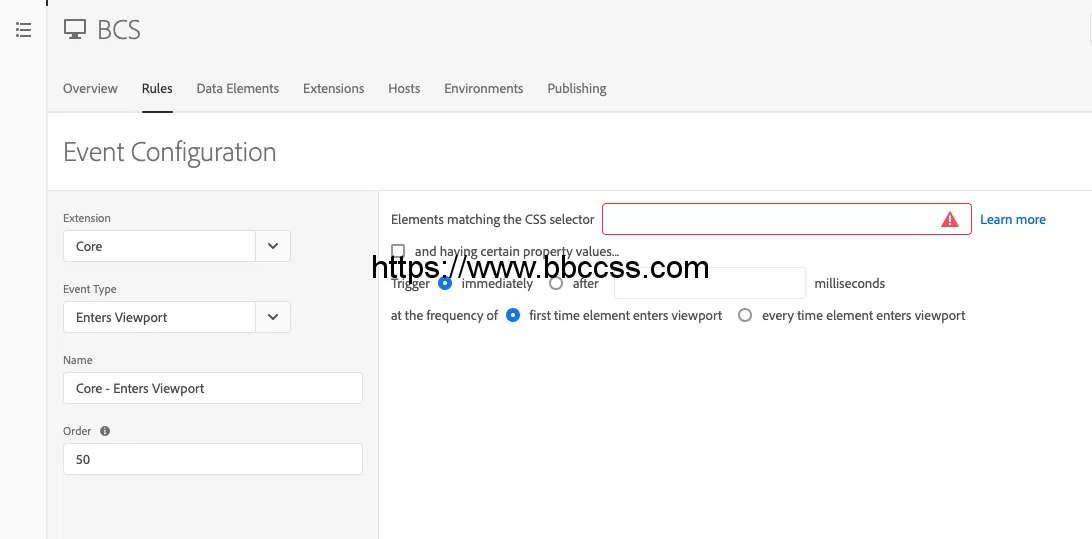
The event configuration will ask for a CSS selector.
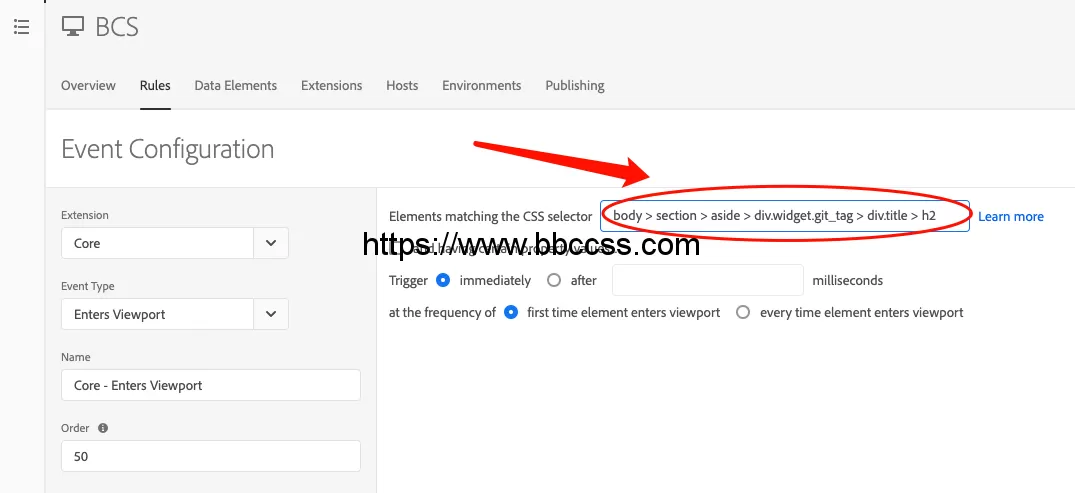
Open the page containing the element you want to track.
- Right-click the element.
- Select Inspect.
- In the browser’s Elements panel, right-click the highlighted HTML node.
- Select Copy → Copy selector.
- Paste the selector into Adobe Tags.
Step 3: Set the Adobe Analytics Variables
Create the first ACTIONS and do the following:
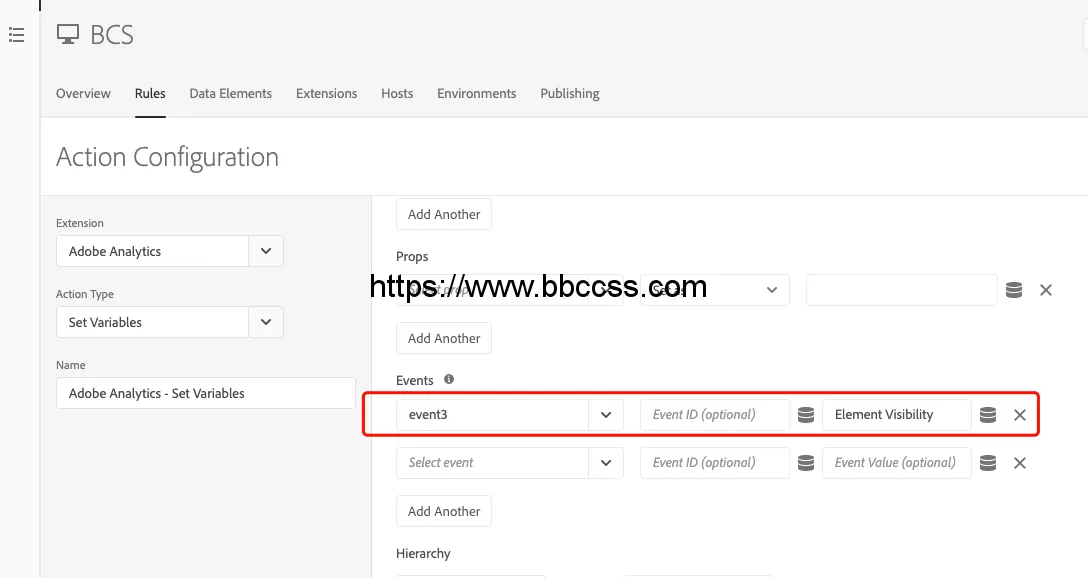
It should be noted that the value assigned by event here needs to be enabled in Adobe Analytics before being used.
Step 4: Send the Analytics Beacon
Create a second ACTIONS and configure it as follows:
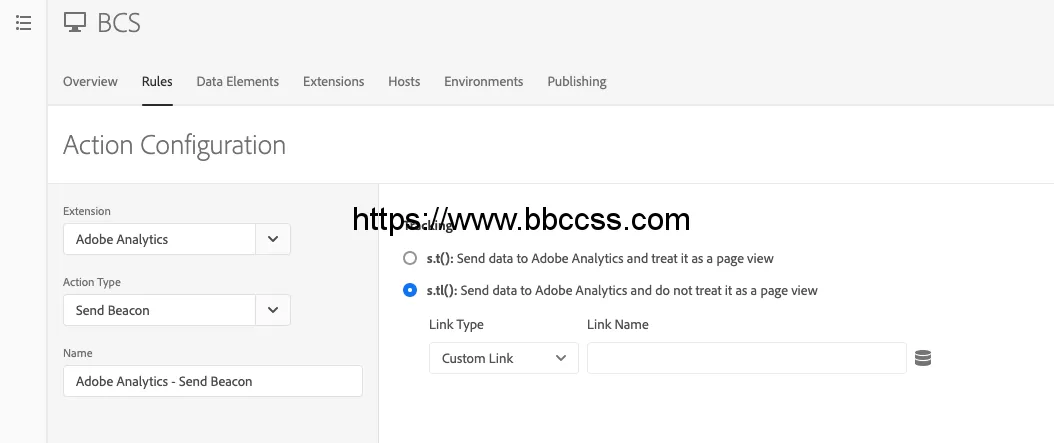
The final action order should be:
- Adobe Analytics – Set Variables
- Adobe Analytics – Send Beacon
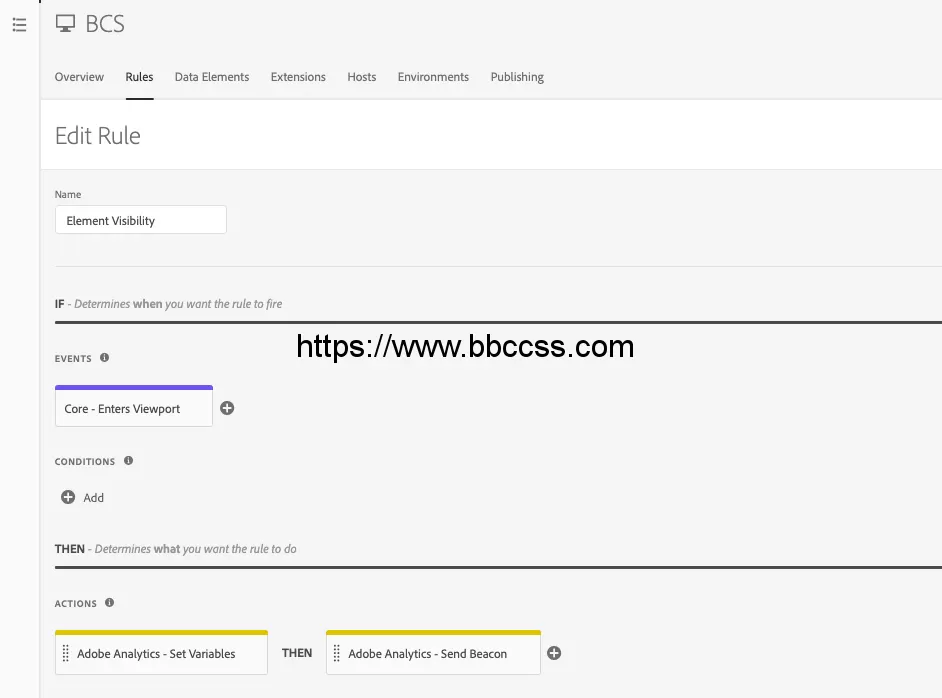
Simple, right? The rule now knows when to fire, what data to set, and how to send it.
Step 5: Build and Test the Rule
Use Adobe Experience Platform Debugger or the browser’s Developer Console to verify that the beacon fires when the target element scrolls into view.
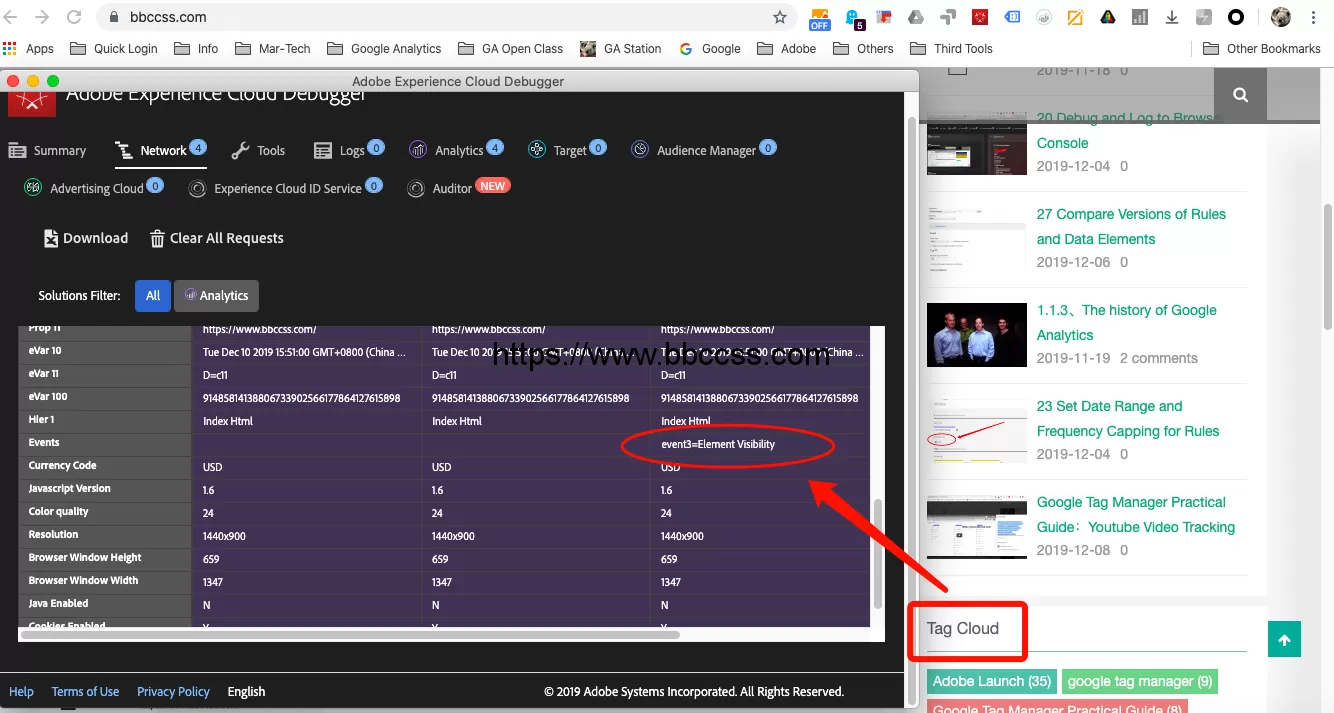
Once validated, publish your library to production.
Final Thought
Element visibility tracking is useful when you need to know whether visitors reached an important part of a page—not simply whether the page loaded. Adobe Tags makes this possible with the Enters Viewport event, but the quality of the data depends on your selector, trigger frequency, Analytics configuration, and beacon type.
I recommend starting with one clearly defined element, triggering the rule once, and validating the complete path from viewport detection to Adobe Analytics reporting. Once that works reliably, you can extend the same pattern to other sections of your website without creating unnecessary noise in your reports.