If you’ve moved from Universal Analytics to GA4 and are trying to figure out how conversions work in the new world, you’ve probably run into a new term: Key Events.
In UA, you had Goals. In GA4, you have Key Events (which used to be called Conversions — Google renamed them in 2025). Same idea, different name, and a few meaningful differences under the hood.
In this article, I’ll walk you through what Key Events are, the different types, how counting works, three ways to set them up, and how to test them. Let’s get into it.
What Are Key Events?
Key Events are user activities that matter to your business. A purchase, a sign-up, a form submission — anything that indicates a user has done something valuable.
In GA4, Key Event = Conversion. Google just changed the name. If you see the term “conversion” in your GA4 reports, it means the same thing as “key event.” Don’t let the terminology switch trip you up.
Built-in vs Custom Key Events
Key Events fall into two buckets:
Built-in Key Events
GA4 automatically provides these for you. There are five of them:
- purchase (web and app)
- first_open (app only)
- in_app_purchase (app only)
- app_store_subscription_convert (app only)
- app_store_subscription_renew (app only)
As you can see, most of them are app-specific. For web properties, purchase is really the only one you get out of the box.
Custom Key Events
These are events you define based on your own business needs.
Each GA4 property can have up to 30 Key Events. Once you hit that limit, you can’t create more. So choose wisely.
A Few Things to Watch Out For
A few things to keep in mind:
- You need Editor permission (or higher) to create or manage Key Events.
- It can take up to 24 hours for a new Key Event to show up in reports.
- You’re capped at 30 Key Events per property.
- Don’t go overboard. Marking too many events as Key Events can artificially lower your bounce rate. Bounce rate in GA4 is calculated based on events, not sessions — so if almost every page fires a Key Event, your bounce rate will look unrealistically good.
Key Event Counting Methods
This is one of those settings that’s easy to miss but can completely change your numbers. GA4 gives you two options:
- Count every event (default):Every time the event fires, it’s counted as a Key Event. If a user hits the purchase event 3 times in one session, that’s 3 conversions.
- Count once per session:Even if the event fires multiple times in the same session, it’s only counted once. This is session-level deduplication, similar to how UA Goals worked.
You can change this in the Key Events list by clicking the three-dot menu next to the event and selecting the counting method.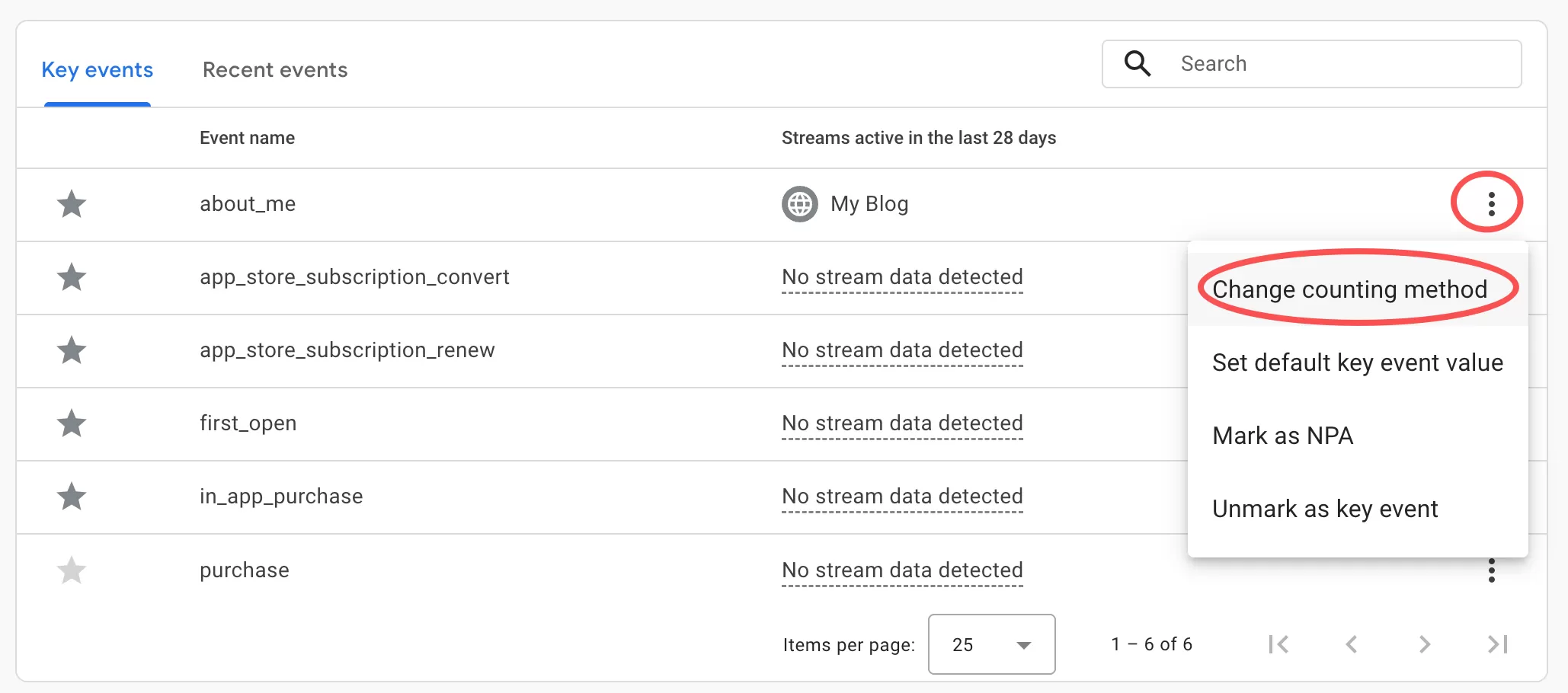 Then you can see:
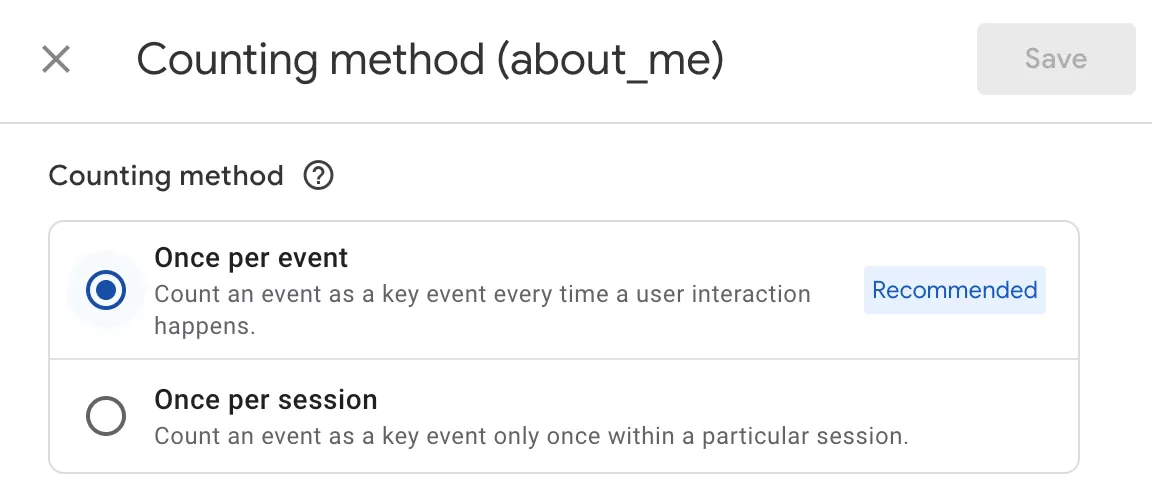
⚠️ Important note: This setting is not retroactive. It only applies to data collected after you make the change. Your historical numbers won’t be recalculated.
How to Set Up Key Events (3 Methods)
Only events can be marked as Key Events in GA4. If you want to track something else — like a page visit or an audience — you first need to turn it into an event, and then mark that event as a Key Event.
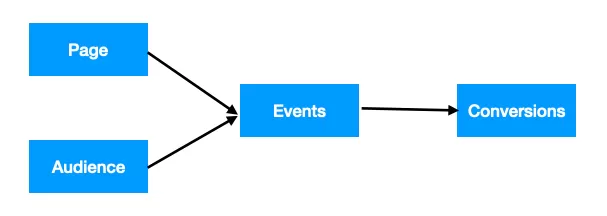
There are three paths to get there:
- Event as Key Event:Mark an existing event directly.
- Page as Key Event:Turn a page into an event, then mark that event as a Key Event.
- Audience as Key Event:Turn an audience trigger into an event, then mark it.
Let’s go through each one.
Event as Key Event (Most Common)
This is the simplest method. You can do it three ways:
Method 1: From the Events Report
In GA4,click「Reports」——「Events」, Click the three-dot menu next to the event and select Mark as key event.
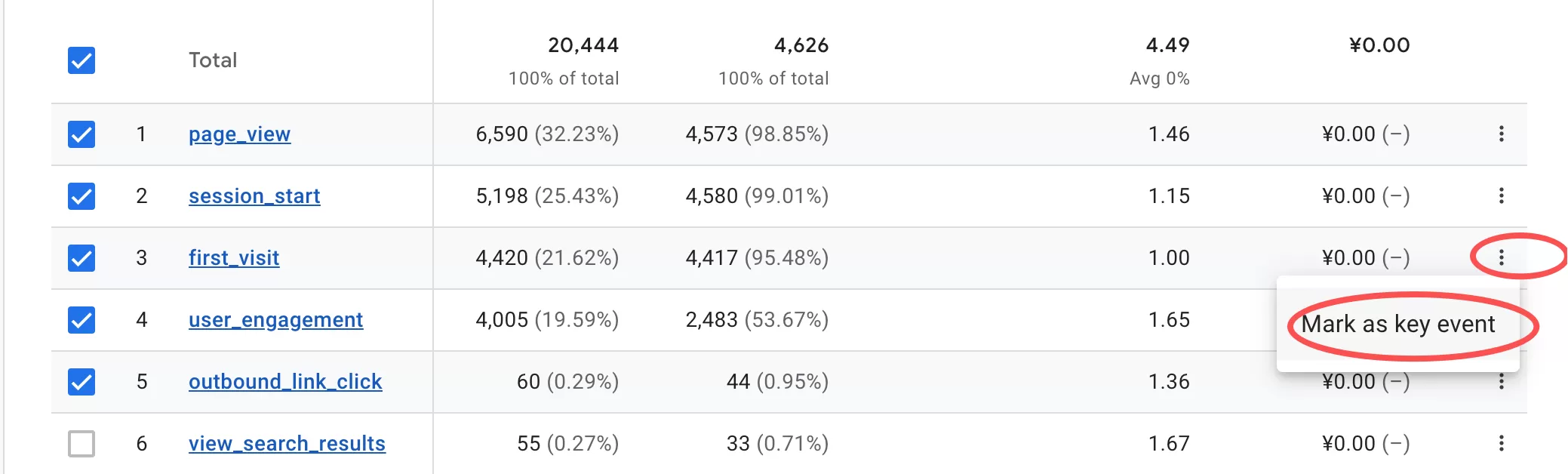
That’s it.
Method 2: When Creating an Event
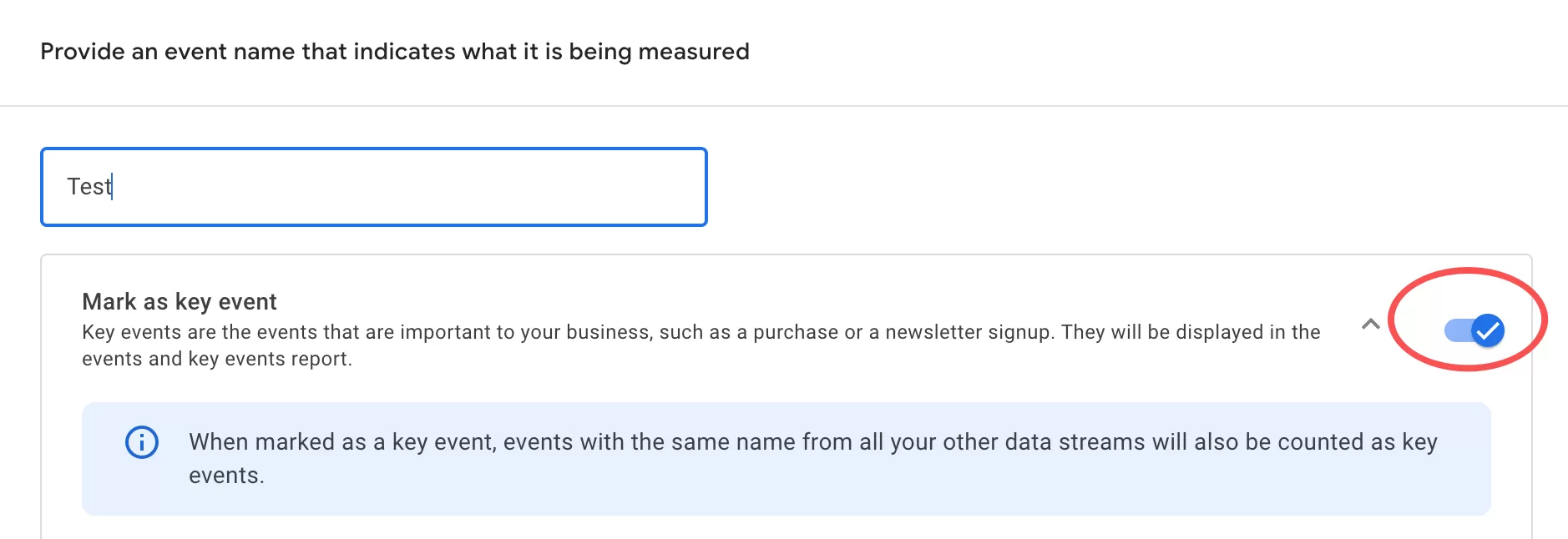
When you’re setting up a new event in GA4, check the box that says Mark as key event before saving.
Method 3: From the Events List in Admin
In GA4,click「Admin」——「Events」, find your event, Click the three-dot menu next to the event and choose Mark as key event.

All three methods do the same thing. Use whichever is most convenient.
Page as Key Event
Sometimes the Key Event is a page itself — a checkout confirmation, a thank-you page, a registration success page. In GA4, the process looks like this: page_view → Custom Event → Key Event
Let’s say your ecommerce site has a payment confirmation page with *buy* in the URL, like /member/course/14/buy
Here’s how to turn that page visit into a Key Event:
In GA4,click「Admin」——「Events」——「Create Event」——「Create」,then make the following settings and check the option“Mark as key event”:
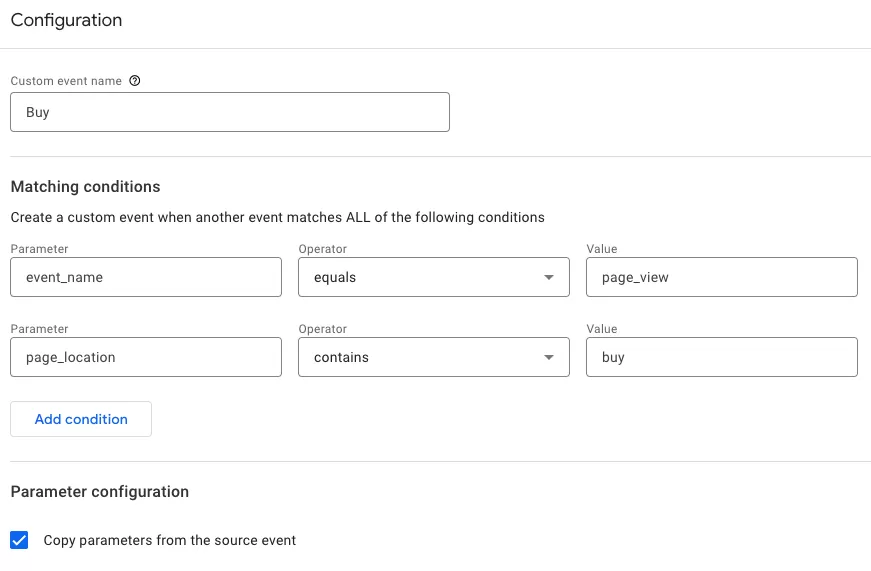
- Custom event name: for example, Buy
- Matching conditions: Set the matching conditions
- event_name equals page_view
- page_location containers buy
- Parameter configuration: Configure the parameters of the event.
- Check Copy parameters from the source event to pass the page_view parameters to your new event.
That’s it. Now whenever someone visits a page with buy in the URL, GA4 will fire your custom event and count it as a Key Event.
Audience as Key Event
You can create an audience based on any combination of conditions, and when a user qualifies for that audience, GA4 fires an event — which you can then mark as a Key Event.
First, create a new audience:
Audiences → New Audience
After defining the audience rules, pay attention to the Audience Trigger option on the right side.
This feature allows the audience qualification to trigger an event.
After that, the event can be marked as a Key Event.
How to Test Key Events
After you set up a Key Event, always test it. Here are two reliable methods.
Method 1: Browser Developer Tools
Open your browser’s developer tools, go to the Network tab, and filter for GA4 requests using v=2. Find the event request you’re looking for. If the parameter _c equals 1, the event has been successfully marked as a Key Event. (_c stands for conversion.)
Method 2: GTM Preview Mode
If you’re using GTM open Preview mode and find the event. Check the event parameters. If the conversion parameter value is 1, you’re all set.
Final Words
Key Events in GA4 are the direct replacement for UA Goals, but they work a little differently under the hood. The 30-event limit, the counting methods, and the fact that you can turn pages and audiences into events first — these are all things that take some getting used to.
I hope this guide helped you make sense of it. If you’ve run into any weird behavior with Key Events — I’d love to hear about it in the comments.